 English

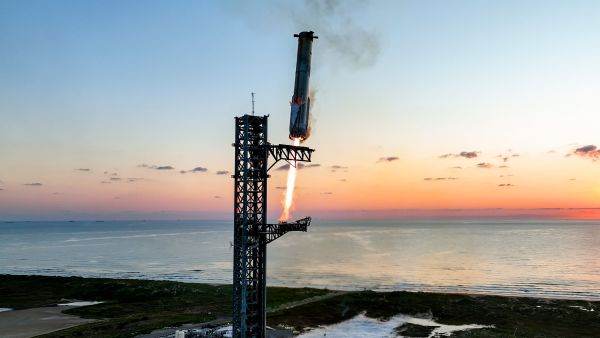
SpaceX has reached a new major milestone in the development of its global internet network: more than 10,000 active Starlink satellites in orbit, nearly seven years after the program began, according to Space.com. The feat comes after two consecutive launches on Tuesday that added 54 new satellites to the megaconstellation in low-Earth orbit. The symbolic 10,000th satellite threshold was surpassed with the first launch: 25 satellites launched from Vandenberg Air Force Base in California, followed by a second launch with 29 satellites from Cape Canaveral in Florida. In total, the constellation has reached 10,049 satellites, almost all of which are operational.
• Reusability and efficiency: the key to success
Both launches used Falcon 9 rockets, known for their reusability: one booster reached its 14th flight, landing on the "Of Course I Still Love You” barge in the Pacific Ocean, the second made its 11th flight, returning to the "A Shortfall of Gravitas” platform in the Atlantic. This strategy significantly reduces costs and allows for an accelerated launch pace.
• A constantly expanding constellation
Since the program began in 2019, SpaceX has launched more than 11,500 satellites, but about 1,500 have re-entered the atmosphere and been destroyed - a normal process for such systems. Currently, Starlink represents the largest satellite network in history, providing: high-speed internet in isolated areas, connectivity in emergency situations, support for critical infrastructure.
The Florida launch was: the 34th Falcon 9 mission this year, the 378th Starlink launch in history. This pace confirms Elon Musk's ambition to transform Starlink into a critical global communications infrastructure.
• Global implications
The rapid expansion of the constellation also raises questions: the impact on astronomical observations, the crowding of low-Earth orbit, the risk of space collisions. However, SpaceX continues to dominate the segment of internet satellites, and the 10,000-unit milestone marks a defining moment in the race for global connectivity from space.


















 Euro
Euro Dolar SUA
 Franc elveţian
 Liră sterlină
 Gram de aur























Reader's Opinion